“If we are not able
to ask sceptical questions, to interrogate those who tell
us that something is true, to be sceptical of those
in authority, then we’re
up for grabs for the next charlatan, political or religious, who comes ambling along.
Carl Sagan
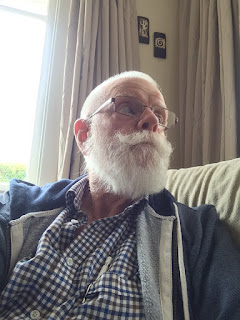
I am a chemical engineer (retired ...😇), married for 60 years, father of 2, and grandfather of 2. I’ve never participated in team sports, but have participated in sports in which I had to rely on my own abilities, occasionally with assistance from others—mountaineering in NZ, rock climbing in Victoria, and sailing in Queensland and New Zealand. My eye is such that I could never address a stationary ball particularly well—so that ruled out golf, croquet, and billiards. But I couldn’t hit a moving one either, so cricket, hockey, lacrosse, and polo were also out of the question—well, not being able to ride a horse made the latter problematic! On the other hand I could read wind and waves on water pretty well—and I could trim a sail! Sailing was great but my son turned out to be better than me—he could sail a boat a knot faster than I could. I always reckoned it was his youth, but he really was that much better than me.
I have worked in a variety of roles and industries, from academia to heavy chemicals to dairy processing and independent private consulting. Apart from the “standard” considerations of the transfer of mass, momentum, and energy, and the dynamics of systems and processes, the latter part of my active professional life involved dairy plant technology and design, construction, economics, and project management.
My interest in the technologies of digital and analog computing started in 1961 when I learned to program and then operate an IBM1620 computer. Starting with FORTRAN, over the years I wrote in many computer languages both compiled and interpreted, including that love of many programmers of my vintage, BASIC which was an acronym which appealed to many of us—Beginners All purpose Symbolic Instruction Code. It always sounded “better” than FORmula TRANslation! The advent of “top-down”, objective programming was a revelation for many, me included, especially when it led me into building a small computer based on an Intel development kit which I used for controlling experiments in the late 1970s. It used an Intel 8086, one of the first 16 bit processors. I developed programs for that kit using an Intel multi-processor microprocessor development system (MDS). Exciting days ... long before the advent of the Raspberry Pi.
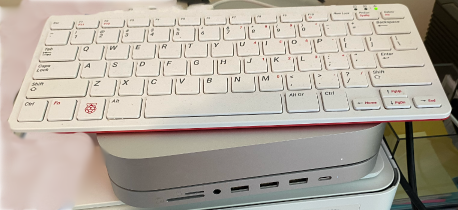
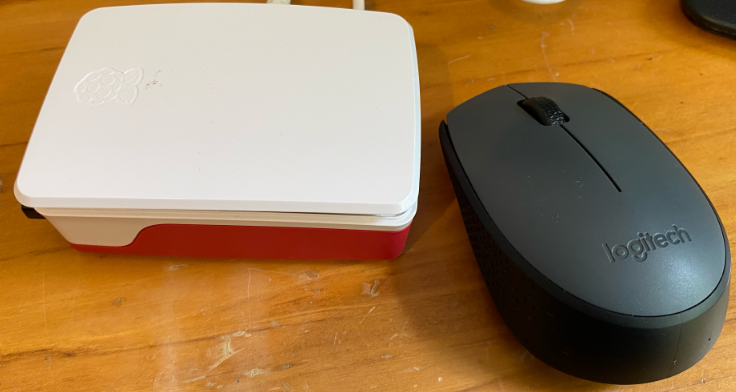
As time passed I developed interests in data anlysis and processing and I recognised, in modern systems involving machine learning and artificial intelligence, methodologies I used in the 1960s and 70s. Neural networks use a technique I used to know as Richard Bellman’s Dynamic Programming. I utilised that in very complex control systems processes essentially limited by the speed at which I could run a program on the computers of the day with their much slower processors and much less memory than we enjoy today. It is sad that none of the articles I have read mention Bellman’s name. I suppose some of the early academic papers will do so, but I haven’t trawled those articles.
In later years I concentrated on web cloud programming with dynamic web pages using the programming language PHP.
Now an octogenarian, my interest in programming languages is largely academic although I have developed some knowledge and expertise in information technology/data science, using it to extend my interest in climate change.
It is this latter that takes much of my attention these days. I have been a vocal critic of the alarmist claims made by some scientists and environmental activists. A rational person, I know that our climate is constantly changing. I do not believe that mankind is wholly responsible for climate change. I do not believe that the effect of greenhouse gases are as alarming as some claim and I have yet to see any evidence that change in climate is a threat to humanity, or, at least, a greater threat than it has ever been. Indeed, I maintain that the greenhouse gas hypothesis has yet to be established and the claim of an approaching climate disaster is unfounded. On the other hand, I have yet to be convinced that the work of the Intergovernmental Panel on Climate Change (IPCC) and the United Nations Framework Convention on Climate Change (UNFCCC) is necessarily a scam, but I recognise that the work and livelihood of many scientists and allied workers who work in the field depend on it to the extent that they must be considered to have unavoidable conflicts of interest. I also have little doubt that many commercial interests involved in "renewable" energy generation have made profits which in other circumstances could be considered morally questionable.
At present the state of knowledge suggests that ALARM IS NOT NECESSARY, that CARBON DIOXIDE IS A FRIEND OF OUR PLANET, and that many governments are pledged to spend countless sums of money on projects which are doomed to fail and which will change economies to the detriment of many.
I have always been keenly aware of the principles of scientific study ever remembering a
quote from Albert Einstein:
“No amount of experimentation will prove me correct. It will take only one to prove me wrong. Einstein
In the last half-century it seems that many have lost sight of the necessity to prove a hypothesis, to validate it before accepting it as fact.